One conspicuous feature of ancient science is its constant awareness of the tradition in which it stands. Indeed, it has sometimes been claimed that this was one of the more serious weaknesses of ancient science, as it is believed to have prompted scientists to look backward rather than forward, thus impeding scientific progress. The burdens of the past, the constraints of tradition and authority, and the increasing textualization of science in later antiquity (sometimes referred to as “the philological paradigm”) have often been thought to hinder empirical research and reduce scientific debate to a seemingly sterile armchair affair, where argument over the correct interpretation of past masters was considered more important than fieldwork and practical application.
Although there is some truth in this appraisal, it reflects a rather unqualified, anachronistic view of the conditions and modalities of science and intellectual exchange in antiquity. This has often been pointed out and need not be elaborated here. But the appraisal also offers a simplified or even misleading picture of how ancient scientists viewed the history of their own subject, ignoring the variety of attitudes they adopted toward it. For the power of authority and tradition was not equally strong in all areas of science; and even in those cases where tradition prevailed over innovation, it is important to remember that this was a particular version of tradition—based on a selective and possibly distorted interpretation of the past—often shaped by the needs and strategies of the present.
Thus, a medical writer such as Galen has been shown to make a highly selective and discriminating use of the views and sayings of the palaioí (the authorities of old), in line with a hidden agenda shaped by his struggles with contemporary rivals. Even at a much less ambitious level of rhetorical strategy, a medical compiler like Oribasius, in his encyclopedic Collectiones medicae, shows deliberate choices in the selection and arrangement of excerpts from earlier authorities. These seem to be inspired by respect for Galen’s authority, combined with a tendency to supplement Galenic passages with excerpts from other medical writers Galen would likely have approved of.
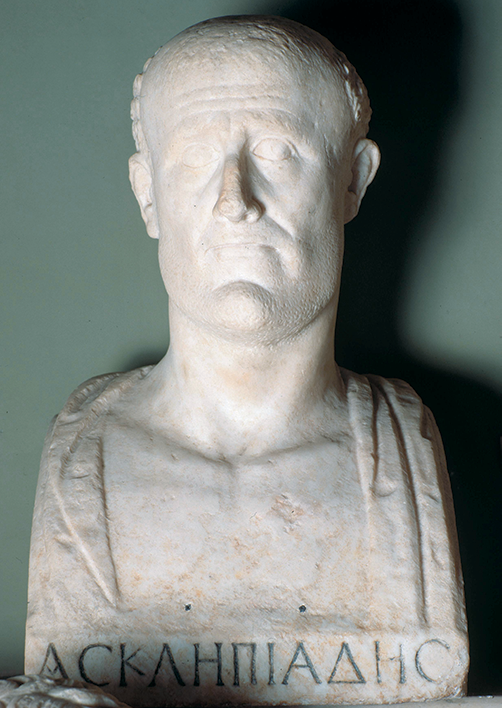
These examples give some idea of the variety of ways in which the past may be present in the writings (and to some extent also, though less directly visible, in the actual research practice) of ancient scientists. This may range from implicit and unacknowledged influence (as, e.g., the influence of Heraclitus can be said to permeate some of the Hippocratic writings without his name ever being mentioned) to explicit and elaborate reports and discussions of predecessors’ views – often, though not always, in a polemical fashion. Furthermore, just as failure to acknowledge one’s indebtedness to one’s precursors need not be intended to conceal influence, conversely, the explicit discussion of the views of earlier authorities need not be interpreted exclusively as receptivity to these views. Thus – to mention another example from ancient medicine – the Methodists, a school of thought which appears to have displayed a particularly vivid interest in the history of their own subject, showed at the same time the most independent and indeed defiant attitude towards the medical tradition, especially towards the very Asclepiades of Bithynia by whom, paradoxically, their medical system was most profoundly influenced.
The variety of ways and methods in which ancient scientists dealt with the intellectual past in their own work is related to a variety of intentions and strategies they had in so doing. These ranged from using the past for the purpose of self-definition and legitimization of one’s own subject or method or doctrines, to criticism of other people’s views, dialectical usage of ‘received opinions’ as stepping-stones in one’s own argumentation, display of learning, and antiquarian interest. Very rarely do we find something comparable to what we would regard as dispassionate, descriptive and comprehensive intellectual historiography based on an intrinsic interest in the past as such.
It is of some importance to stress this variety. For it is sometimes claimed that ancient philosophers and scientists had hardly any historical awareness and a poor understanding of chronology and the historicity of certain developments in their subject, in other words, that there was no such thing as intellectual historiography in the ancient world. Thus as far as biographical accounts of ancient scientists are concerned (as we find these in writers such as Plutarch or Eunapius), it is felt that most of the material is of a rather anecdotal kind and verges on the sensational, while displaying hardly any interest in the intellectual development of the scientists in question. Another example concerns doxography, the collecting and listing of dóxai, ‘tenets’ held by authorities, often in the form of seemingly sterile, indiscriminate concatenations of doctrines summarized in a petrified form that appears to have lost all philosophical dynamics. It is often claimed that this has very little in common with the history of philosophy and science as we understand this today, the main defects of ancient doxography being the lack of chronological accuracy and comprehensiveness, the apparent absence of any serious attempt at avoiding anachronism and at understanding a thinker’s ideas in their own systematic and historical context (as this manifests itself, e.g., in the terminology in which these ideas are paraphrased and analysed), as well as the absence of any serious attempt at causal explanation of the development of thought.
There is, again, some truth in these appraisals and there are certainly cases to which they apply, but one should beware of premature generalizations and of assigning just one single purpose to a whole ‘genre’ of writings. This has especially happened to doxographical writing, whose purpose was recently defined as ‘dialectical’, i.e. serving as a basis for argument in a certain type of discussion, or as a kind of ‘philosophical’ historiography – as opposed to ‘historical’ historiography – intended to actualize the ideas of earlier thinkers with a view to their relevance to contemporary issues. While these definitions may be useful to explain the emergence of the doxographical type of writing and may well be correct in some cases, doxographical texts should not a priori be denied any historiographical value or intention whatsoever. Doxography may well serve a variety of purposes, especially when it is incorporated into a wider framework. Ancient (intellectual) biography and doxography can be said to be ‘historiographical’ not only in so far as they describe aspects of the (intellectual) past, but also in so far as the way in which they do so can be related to the theory and practice of ancient historiography in general.
More generally, as recent publications in ‘meta-history’ have shown, all historiographical discourse (i.e. any text whose subject-matter is considered to belong to what may conveniently be called ‘the past’) may have a whole variety of strategic purposes and rhetorical features which can be fruitfully studied. The portrayal of the past is rarely an entirely neutral, impartial, non-ideological exercise aimed at reconstruction of ‘what happened’ – and this applies particularly to the ancient world, where historiography was a literary genre, in which a considerable amount of rhetoric, pathos and drama was permitted and indeed encouraged, and whose primary purpose was to provide the audience with a certain ‘usefulness’ (a lesson to be learned, a paradigm to follow, etc.). This is not to say that ancient historiographers did not have to worry about standards such as truthfulness and accuracy in their account of the past in order to satisfy their critics, but there was considerable flexibility in the extent and the level to which these standards were applied. Thus in the use of direct speech, the historian was under no obligation to report the ipsissima verba of the speaker as long as he kept faithful to the ‘gist’ of what was said, and a similar poetic licence existed in matters of arrangement (which affected the issue of chronological order) and characterization. These genre conventions provided historians with considerable room for manoeuvre, manipulation or even fabrication, and for creating versions of the past that suited their own agenda or that of their audiences, e.g., by concealing, distorting or selectively emphasizing certain aspects of the past at the expense of others, or by putting the present into a particular light or perspective.
These considerations apply no less to the historiography of thought (philosophy, science, literature, and cultural history in general). Versions of the intellectual past may similarly be inspired by underlying agendas to put certain ideas or thinkers into a certain perspective, e.g., to associate oneself with, or dissociate oneself from, certain philosophical or ideological strands of the past, or obey established patterns and topoi. Again, this applies no less to the ways in which the history of philosophy and science was written in the ancient world. Thus it is easy to see how distortions may occur in the rendering of a thinker’s ideas when this is done in indirect speech, something the ancients had few qualms about because the diánoia, the ‘meaning’ or ‘gist’ of what someone had said, was considered more important than the léxis, the literal phrasing of the statement itself. As for topoi, one may think of the striking tendency of many ancients to locate the origin of philosophy and mathematics in Egypt, or at any rate among the ‘barbarians’, an expression of the interest in foreign culture that arose in the 5th and 4th century BC, but which established itself as a dogma in the later tradition. Ulterior motives or romanticizing tendencies are especially likely to colour the account when historiographical passages appear in otherwise non-historiographical contexts (such as political speeches, prefaces to scientific works, etc.), and a fortiori in literary representations of scientific activity, e.g., in Herodotus’ portrayal of Democedes’ activity as a healer (Historiae, III, 129-137), or Plutarch’s portrayal of Archimedes’ achievements in engineering for the purposes of warfare (Marcellus, 14-17).
Apart from these rhetorical, manipulative aspects of historical writing, the representation of the past may also be constrained or even determined by factors beyond the historiographer’s control: his sources may be scarce, he may have had restricted access to the writings of the thinkers whose ideas he describes or have been dependent on intermediary sources, or his rendition of predecessors’ views may be biased as a result of interpretative traditions in which he stood (e.g. commentaries on predecessors’ works). Again, this point is particularly relevant to the ancient world, where the availability of primary literature was mostly awkward and the dependence on intermediary material great. The study of philosophical and scientific literature in antiquity relied heavily upon an extensive apparatus of secondary literature comprising doxographic catalogues of names and doctrines, introductions, bibliographies, biographical accounts, compendia, lexica, commentaries, and other introductory (‘isagogic’) material that accumulated during a long tradition. Although most of this material is lost, it has demonstrably shaped the perspective from which the intellectual past was viewed and described by later writers, and it appears to have exercised a powerful influence on ancient practices of interpretation of philosophical and scientific texts.
In the previous paragraphs, the words ‘philosophy’ and ‘science’ have both been used without much qualification. This chapter is not the place to deal with the differences between modern and ancient concepts of science, or between modern ways of demarcating philosophy from science and the way(s) these areas were organized in antiquity. But the issue does have some implications for the study of the historiography of these subjects. For while there is a rich collection of surviving ancient texts on the history of ‘philosophy’ (ethics, metaphysics, first principles etc.), the material is less abundant in the areas of the sciences; and with some sciences (e.g., astronomy), it is almost invariably embedded in contexts dealing with physics or philosophy in general. As this volume deals with the history of science, this means that those areas that would, from a modern point of view, count as sub-areas of ‘philosophy’ rather than ‘science’ (e.g., ethics, logic, epistemology, metaphysics), will be excluded from consideration, but it should be realized that this tears areas such as astronomy or optics from contexts they were considered to be part of, and it should constantly be borne in mind that the dividing lines between physics and metaphysics, or between physiological psychology and philosophy of mind, are different now from what they were like in the ancient world.
A further, perhaps more pertinent consideration is that in the ancient world itself divergent views were held on the distinction between philosophy and the sciences – and accordingly the historiography of philosophy and the sciences was organized along dividing lines that did not remain unchanged throughout antiquity. We touch here on issues of specialization and on what may be called the Selbstverständnis or self-perception of the various sciences in the ancient world, i.e. the way a subject is perceived by its students (or practitioners) in relation to other subjects and the organization of its subject-matter, methodology and practical implementation. Writing the history of one’s own subject can be an important means of such self-definition, and it is no coincidence that ancient prefaces to technical writings often have an historical paragraph stating the origin and early development of the subject (e.g., Dioscurides’ and Scribonius Largus’ treatises on pharmacology, or Aristoxenus’ Elementa harmonica).
Hence the extent to which ancient scientists conceived the history of their own discipline as a part of a larger whole, e.g., ‘philosophy’, or rather as something distinct with a founder, an establishment and a development of its own, may convey some idea of how they perceived themselves and how they organized their scientific activities. For example, in his historical account of geometry (which is part of the introduction to his commentary on Euclid’s Elements), the Neoplatonist philosopher Proclus assigns a central role to Plato and the Academy and even goes so far as to portray Euclid as a Platonist philosopher, thus advancing what may be called a philosophicalization of mathematics which not all mathematicians in antiquity would have endorsed. Likewise, but conversely, the revival of Pythagoreanism in later antiquity inspired writers such as Iamblichus and Syrianus to assign to mathematics an all-pervading role in the history of Platonism and indeed of philosophy in general.
On the medical side, it is interesting to note that in the historical preface to his De medicina the Roman writer Celsus portrays Hippocrates, the father of medicine, as the one who separated medicine, i.e. the treatment of diseases (morborum curatio), from philosophy (studium sapientiae, rerum naturae contemplatio), a separation which Celsus considers healthy and to be acclaimed. This position finds some confirmation in the Hippocratic treatise On ancient medicine, whose author distances himself explicitly from the speculative study of nature and who claims that, rather than basing medicine on ‘philosophy’, the only way to understand the nature of the human body is by studying medicine.
On the other hand, the interconnectedness of medicine and (natural) philosophy, and indeed the desirability of this connection, was stressed by Aristotle by reference to the fact that «the more distinguished doctors» base their medical investigations and practice on principles derived from the study of nature, while conversely some of the more serious physicists also take account of the principles of health and disease (De sensu et sensibili, 436a17–b2; De respiratione, 480b22–31). This Aristotelian view was endorsed by many doctors (such as Diocles of Carystus and Galen) and natural philosophers (e.g., Theophrastus, Strato, and Alexander of Aphrodisias), and accordingly the reciprocal relationship between medicine and (natural) philosophy is reflected in the historiography of both subjects.
Thus the medical doxography of the so-called Anonymus Londinensis incorporates Plato and Philolaus in his doxographical account of the causes of diseases, while doctors such as Diocles, Asclepiades and Erasistratus figure prominently in the 4th and 5th books of Pseudo-Plutarch’s doxography on physics.
Strong self-awareness and reflection on the relationship with ‘philosophy’ may have been one of the reasons why ancient medicine and mathematics seem to have developed a considerable historiographical (both doxographical and biographical) activity which was to some extent independent of the doxography on (natural) philosophy. Physics was throughout antiquity considered to be an integral part of ‘philosophy’, and this may have been one of the reasons why the historiography of related subjects such as astronomy, mechanics and optics seems to have been dealt with predominantly in the context of the doxography on (natural) philosophy.
This in turn had serious consequences for the selection of topics and authorities. Thus astronomical subjects are discussed at considerable length in Pseudo-Plutarch’s Placita philosophorum, but the authorities referred to there are mainly ‘philosophers’, with specialists such as Aristarchus and Seleucus being mentioned only rarely (II, 1; II, 24; III, 17). A similarly restricted interest, with Pseudo-Plutarch, in what the specialists have to say is displayed with regard to subjects such as meteorology and geography. The majority of views reported by Pseudo-Plutarch are attributed to philosophers, and only occasionally does one find references to the ‘astronomers’, the ‘doctors’, or just ‘some people’.
However, the fact that no specialized doxographical tradition comparable to what is available for medicine has survived for subjects such as astronomy, mechanics and optics, may alternatively be explained by the fact that in these areas there was less controversy and hence less reason to expand doctrinal divergences in the literary form of contrasting views held by different schools of thought. Moreover, our picture may be distorted by lacunose textual transmission: there is at least some fragmentary evidence for separate historiographical treatment of astronomy within the Peripatetic school.
A further relevant point here is the fact that medicine displayed, or at any rate was perceived as displaying, a differentiation and diversification into different ‘schools of thought’ or ‘sects’ similar to philosophy. A distinctive feature of the later (i.e. Hellenistic and Imperial) historiography of ancient philosophy and science is the division into different hairéseis or sectae such as, on the philosophical front, the Stoics, Epicureans, Sceptics, Peripatetics, etc., and on the medical the Dogmatists, Empiricists, Herophileans, Erasistrateans, etc. Thus Diogenes Laërtius’ Lives and doctrines of the famous philosophers is arranged according to philosophical schools, and in medicine one can think of Soranus’ (lost) Lives, schools and writings of doctors. Furthermore, just as the early history of philosophy was described by doxographers in terms of the emergence of two, or sometimes three, ‘schools’ (the Ionian philosophers, the Italians, with the Eleatics sometimes distinguished as a third), likewise early Greek medicine was believed (from the Hellenistic period onwards) to have displayed a diversification into a Coan, a Cnidian and a Sicilian school of thought.
Whether such ‘schools’ actually existed and had some form of institutional organization or are merely, or predominantly, to be regarded as later historiographical constructions, is not in all cases easy to decide, and the evidence varies from one haíresis to another; at any rate, to avoid misleading connotations, hairesis is best translated ‘school of thought’ rather than ‘school’. However this may be, the division into such ‘schools’ and the classification of individual thinkers as members of a particular school provided a convenient historiographical pattern and is likely to have contributed to schematization and indeed simplification of processes of intellectual development that must in reality have been far more complicated and diverse.
Since philosophy was divided into such ‘schools’, the physical sciences, in so far as they were studied within the context of these philosophical systems, were likewise believed to reflect to a greater or lesser extent the philosophical background and main tenets of the school in which they were practised, and any activity that happened outside this context was largely ignored. Medicine itself also differentiated into several distinct ‘sects’ in the early Hellenistic period, and these schools of thought (especially the Herophileans) developed their own historiographical traditions, in which the doxography of the own school but also that of rival schools was often used for purposes of self-assertion or polemics.
Related to this literature on the hairéseis, and to some extent underlying it, is the historiographical pattern of the diadochaí or ‘successions’, according to which intellectual history is viewed as a continuous succession of thinking from teacher to pupil, suggesting an almost genealogical line of descendancy. This pattern of thought can already be perceived in Theophrastus’ doxographic work, but it developed into a separate genre in the Hellenistic period, with Sotion of Alexandria (second century BC) as its main representative. It greatly influenced the later doxographical and biographical tradition (e.g., Diogenes Laërtius), in which intellectual kinship between two thinkers was often romanticized into a personal relationship of teacher and pupil.
Let us now take stock of the most important remains of the ancient literature on the history of the sciences. A general interest in the origins (archaí) and further development of the téchnai (sciences and crafts) emerged in the fifth century BC as part of a wider interest in the development of human civilization. Accounts of cultural history (or fragments thereof) can be found in Democritus, in the Corpus Hippocraticum, in the Sophistic movement (especially Hippias of Elis), Plato and Aristotle, in Peripatetic philosophers such as Dicaearchus, in Epicurus and Lucretius, Diodorus of Sicily, Porphyry, etc. Depending on the viewpoint, such cultural histories can be characterized as either ‘progressivist’ or ‘primitivist’ in tendency: the very emergence and further perfection of the sciences could be seen as a sign, or even a cause, of general cultural progress, but also, alternatively, as a sign (or a cause) of a more general decline in lifestyle: thus in poetic accounts of the early history of mankind (as we find these, e.g., in Hesiod’s Opera et dies 110 ff., Vergil’s Georgica, I, 125 ff., and Ovid’s Metamorphoses I, 89 ff.), the emergence of agriculture and seafaring is said to have accompanied the decline that rapidly set in after an initial Golden Age.
The same ambivalence in appraisal is to be noted on the level of the individual sciences. Thus in medicine, the author of the Hippocratic work On ancient medicine adopts (possibly inspired by Democritus) a ‘progressivist’ view on the development of medicine, viewing the accumulation and refinement of experiential dietetic knowledge from one generation to another as a continuous improvement of the ways in which mankind has managed to master the effects of the various foods and drinks on the human body. Yet in a rather different mode, the Peripatetic philosopher Dicaearchus refers to «the most refined physicians» (glaphyrótatoi iatroí) for having believed in a sort of medical Golden Age, in which man enjoyed permanent health as a result of an exactly appropriate diet, which prevented his body from producing residues (perittómata), which in their turn would cause diseases. (Die Schule, I, fr. 49).
Treatises on the origins and history of the téchnai or artes began to be produced in the period of the Sophistic movement (fifth century BC), in which human culture itself became an object of study. Particularly relevant here is the literature ‘on discoveries’ (Perì heurämátün) and the topos of ‘the first inventor’ (prõtos heuretés). Although antecedents of this notion can already be found in archaic Greek literature, the quest for a ‘first inventor’ became the subject of more systematic study in works entitled Perì heurämátün by Hellanicus of Lesbos, Scymon of Mytilene and the historian Ephorus, and a vast literature of this kind seems to have been produced in the Peripatetic school, of which only fragments have survived. In fact, much of the ancient historiography of science seems to have used the topic of ‘discoveries’ as a guiding principle of selection and arrangement, thus achieving what may be called the ancient equivalent of the ‘problem-oriented’ way of writing intellectual history, with the main discoveries in a certain subject being enumerated (not necessarily in a chronological order) and with the names of the ‘finders’ attached. Thus the Peripatetic historian of science Eudemus (fourth century BC) seems to have composed his history of mathematics largely on the basis of a list of such discoveries, though presented in a teleologically oriented order (Die Schule, VIII, frr. 133-149), and the Neoplatonist philosopher Proclus likewise concentrates his account of the history of geometry on the contributions made by individuals to the solution of particular mathematical problems.
It is easy to see how these ‘discovery’ stories came to constitute the focus of biographical accounts of scientists’ activities and began to lead a life of their own, thus providing anecdotal material for occasional historical paragraphs in technical writings. Examples are Vitruvius’ accounts of Ctesibios’ water-organ and of Archimedes’ serendipitous discovery of the different density of silver and gold in the tub (heúräka), or Boethius’ account of Pythagoras’ discovery of harmonies and chords. (Vitruvio, De architectura, X, 7-8 and proem 9-12; Boethius, Boezio, De institutione musica, I, 10-11).
In general, ancient philosophers and scientists from the beginning showed a strong tendency to consider their own work in relation to the achievements of predecessors, usually in the introduction to their writings and often in a polemical fashion (e.g., the Hippocratic work On regimen in acute diseases; or Dioscurides’ work on pharmacology; for less polemical examples see the prefaces of the Hippocratic work On regimen and Aristoxenus’ Elementa harmonica). Yet a more systematic study and elaborate literary discussion of the earlier history of a particular subject seems first to have been undertaken by Aristotle and in the early Peripatetic school. The works of Aristotle himself often provide surveys of the views of his predecessors on the subject at issue: many of his works begin with such historical overviews, and sometimes doxographical passages are inserted later on as the context allows or requires. Furthermore, the differentiation of the specialized sciences that occurred in the Peripatetic school shortly after Aristotle was accompanied by projects of the writing of historical surveys of the earlier history of the subjects in question, with Theophrastus writing on physics, Meno (or perhaps Aristotle himself) on medicine and Eudemus on mathematics and theology.
To be sure, there is evidence to suggest that Aristotle was not the first to record the history of the various subjects concerned: at least for some of his surveys of Pre-Socratic philosophy (e.g., his reports on Thales of Miletus) he probably did not himself consult the writings of the thinkers in question but relied on intermediary doxographical surveys and catalogues of views that were already available. An important preparatory role here seems to have been played by the Sophist Hippias of Elis in his Synagügé. Aristotle did, however, elaborate these presumably rather rough surveys and made the consideration and appraisal of the views of earlier and contemporary thinkers an integral part of most of his investigations. In order to do so, he had to fit these surveys into his own argumentation and to mix descriptive report and critical evaluation. The most conspicuous examples of these passages are his discussion of the origins of the sciences in Metaphysics I, of the Presocratics’ search for causes and first principles in the same work and in Physics I, and his discussion of the psychological doctrines of predecessors in De anima I. Of particular interest for the life sciences (zoology, physiology and embryology) are the doxographical sections in Historia animalium (III, 511 b - 513 a), where he discusses the views of Syennesis of Cyprus, Diogenes of Apollonia and Polybus (to be identified as the author of the Hippocratic work De natura hominis) on the anatomy of the bloodvessels; the doxography on the purposes of breathing in De respiratione (470 b 6 - 474 a 24), where he discusses the views of Democritus, Empedocles, and Plato; and the doxography on generation and on the origin of the semen in De generatione animalium (I, 721 b - 722 a; IV, 763 b - 766 a), which deals with a range of views whose spokesmen mostly remain anonymous in Aristotle’s text.
There has been much scholarly discussion about the nature and purpose of these doxographical passages in Aristotle’s works, and Aristotle has repeatedly been criticized for giving inaccurate, selective or even distorted reports about the doctrines of his predecessors. There is certainly a strong bias in his account of some philosophers in so far as he tends to assess their views according to the extent to which they have contributed (or fallen short of doing so) towards the achievement that Aristotle’s own philosophy constitutes. It has also been observed that Aristotle uses the doctrines of his predecessors in a very specific manner, often engaging in argument and aporematic questioning of their positions in order to facilitate a certain line of reasoning. To be fair to Aristotle, it should be said that he is fully aware of this and does not intend to provide comprehensive surveys in chronological order: the philosophical justification he offers for his procedure is that the views of earlier thinkers are likely to contain some element of truth and that the more they agree, the likelier it is that they have grasped (parts of) the truth. At the same time, he says, the points where they disagree or where their statements are ambiguous are likely to point to genuine difficulties that are in need of further investigation. Thus Aristotle considers the exposition of the doctrines of the ancients an important heuristic, preliminary strategy in his search for the truth: it is part of his larger procedure of «stating the appearances» (tithénai tà phainómena), since «opinions» are just as much part of «what presents itself» as empirical facts and observations. It should also be said that Aristotle is not completely unaware of historical dimensions and that he does have some interest in the social background of the development of science (e.g., his view that mathematics, the great example of the pursuing of knowledge for its own sake, originated among the religious class in Egypt, as these had the leisure to devote themselves entirely to theoretical studies).
Whether Aristotle is also the author of the ‘Collection’ (Synagügé) of medical doctrines preserved in indirect, abbreviated and severely mutilated form in the so-called Anonymus Londinensis, is a disputed issue, but a Peripatetic origin seems certain. The text has survived on papyrus as the second part of a medical triptych, whose first part is a discussion of several medical concepts and definitions and whose third deals with physiological issues (nutrition, sleep, respiration). The papyrus seems to have been written in the first or second century AD and has been identified by papyrologists as an autograph. The author of the papyrus is unknown, but in the second part of his work he frequently refers to a doxographic work on the causes of diseases «written by Aristotle», which appears to have served as a basis for his own report and which can be reconstructed on the basis of this work. To be sure, from as early as the times of Galen, doubts have been voiced about the Aristotelian authorship of this Peripatetic basis, and it has been thought that this must in fact have been the so-called Menoneia, a collection of medical doctrines written, or edited by, or dedicated to a certain Meno, an otherwise unknown pupil of Aristotle. Recently, however, scholars have argued that the Aristotelian authorship of what served as a basis for the second part of the Anonymus’ report should be taken seriously.
However that may be, in this section the author reports the views of some twenty medical writers (many of whom are not elsewhere attested) on the causes of diseases. Underlying the arrangement is a division into two types of causes the physicians are reported as adhering to: the ‘elements (stoicheêa) in the body’ and ‘the residues’ (perittómata, a characteristically Aristotelian or at any rate Peripatetic concept). Another striking feature (which was to become characteristic of much doxographic writing) is that the views recorded are simply reported without any indication by the reporter as to their correctness. However, in a remarkable passage on the views of Hippocrates, the Anonymus criticizes ‘Aristotle’ for crediting Hippocrates with a view that seems to correspond with that of the author of the Hippocratic treatise De flatibus; and he subsequently presents as the genuine Hippocratic position a view which bears more resemblance to that of the author of the Hippocratic work De natura hominis (a work which was incidentally known to Aristotle but attributed by him to Polybus). Also, as we have said before, Plato figures prominently in the Anonymus, and it is of some significance that his views on the origins of diseases (as expressed in the Timaeus) appear authoritative enough to be reckoned with (later on Galen was very impressed by Plato’s medico-physiological doctrines and attempted – most emphatically in his work De placitis Hippocratis et Platonis – to make his own views appear in unison with those of Plato). In the third part of the papyrus, the Anonymus discusses the physiological doctrines of Erasistratus, Herophilus and Asclepiades. This must be based on a post-Aristotelian source, possibly the Herophilean doctor Alexander Philalethes (first century BC).
As for other Peripatetics, pride of place should be given to Theophrastus’ work on Doctrines related to nature (Physikaì dóxai, as is the more likely title instead of Physikõn dóxai). The work does not survive, although an extant section on sense perception (referred to as the De sensu) is sometimes believed to have been derived from it, if not part of it (psychology was considered a part of physics in Peripatetic thought). Most of the testimonies concerning the Physikaì dóxai derive from Simplicius’ commentary on the Book I of Aristotle’s Physics, and this accounts for the heavy emphasis on fundamental theoretical physics: Theophrastus seems to have discussed the question of first principles of the natural world, whether they are one or many, finite or infinite in number, whether they are material or immaterial, what other characteristics they have, etc., and it seems that the doctrines of the Pre-Socratic philosophers he reports (Anaximander, Anaxagoras, Democritus, Xenophanes, etc.) are arranged according to a dichotomous pattern (the ‘principle of division’, diaíresis, that pervaded much of the doxographic literature), although not without consideration of their chronological order. Other fragments of the work suggest that Theophrastus also dealt with astronomical issues and the question of the origin of the cosmos, particularly Plato’s account in the Timaeus.
As for the extant De sensu, this deals with the modalities of physiological psychology. Theophrastus reports the views of a number of Pre-Socratic philosophers and of Plato; characteristically, he divides them into two main groups, those who argue that perception takes place on the basis of a similarity between percipient and perceptible object, and those who hold that this is based on a difference between the two. Theophrastus subjects both groups of thinkers to severe criticism; contrary to Aristotle, however, he does not express agreement with any of them or indeed his own views on the subject (this aporematic character was to become a recurrent feature of doxographic discourse).
The aftermath and influence of Theophrastus’ doxographic works has been the subject of considerable scholarly discussion. It was believed (by the German philologist Hermann Diels) to be the starting point of the later tradition of the literature on aréskonta or placita (‘tenets’), a cumulative catalogue of philosophical and scientific views and names of authorities that was used and supplemented by later generations and had a considerable influence on later perceptions of earlier intellectual history. Traces of this tradition (which is associated with the doxographer Aëtius, whose work is, however, lost) can be found in writers such as Cicero and in later compilations and excerpts by Pseudo-Plutarch, Pseudo-Galen, Theodoret, John Stobaeus and several other minor sources.
A related question is the function or ‘use’ of such doxographic surveys, which at first sight appear rather sterile, unexciting and indiscriminate catalogues devoid of any philosophical interest. It has been suggested that the collecting of ‘received opinions’ (tà éndoxa) as it takes place in doxographical writing ought to be seen as a preparatory stage for the ‘dialectical’ reasoning on the basis of such views as Aristotle advocates in his Topica and puts in practice in many of his own works; and the arrangement of views according to a dichotomous pattern (diaíresis) serves the logical analysis of an issue into its specific components. On this view, it is the doctrinal positions that matter rather than the names of the authorities to whom they are attributed.
A more specific application of doxographic discourse appears later on with the Sceptic philosopher Aenesidemus (first century BC): the distinction of various positions taken by various authorities with regard to a particular issue serves the exposition of the ‘disagreement’ (diaphünía, dissensio) between the authorities, and this is used by Sceptic philosophers in order to demonstrate the uncertainty of such issues and thus to justify the Sceptical position of abstention from judgment.
Against this background, several features of the collections of dóxai such as we find in Pseudo-Plutarch and the other sources mentioned can better be appreciated. In Pseudo-Plutarch’s work, which survives in five books, dealing with first principles and theoretical physics (Book I), cosmology (II), meteorology (III), psychology (IV), generation and embryology (V), every chapter begins with a question (e.g. ‘how plants grow and whether they are living beings’), to which various possible answers are briefly stated. These are put in the mouth of earlier thinkers without the doxographer himself stating consent or disagreement. Thus the views of earlier authorities are only cited (or rather summarized) with a view to their relevance to a particular question: no attempt seems to be made at exhaustive coverage of the subject, chronological accuracy or probing philosophical analysis of the views in question. (It should be said, however, that not all chapters fit this ‘dialectical’ pattern equally smoothly).
It seems that doxographic surveys of this kind had a considerable influence on the later historiography of philosophy and the sciences, and several reports on, e.g., Pre-Socratic natural philosophy (such as those offered by Christian writers like Hippolytus and Theodoret) are based not on direct acquaintance with the writings of the philosophers themselves but on such highly selective and simplifying accounts in the doxographic tradition, or on anthologies, collections of sayings, etc.
Thus Diogenes Laërtius’ Lives and doctrines of the famous philosophers owes much to these doxographical traditions, to the literature on ‘successions’ and to an extensive biographical tradition of works ‘on lives’ (perì bíõn). Diogenes’ work is on ‘philosophers’ not scientists and adopts the division into philosophical ‘schools’ as a principle of arrangement, hence his work is of limited relevance to the present chapter (though Book VII contains an extensive report on Stoic cosmology, and Book X has preserved in direct speech Epicurus’ views on physics and psychology as expounded in his Letters). Diogenes pays much attention to the life, character and physical appearance of the philosophers, provides catalogues of their works and quotes extensively from their writings (letters, wills, etc.). The doctrines take a more subordinate place in his work: they are summarized very succinctly and are clearly based on intermediary sources.
In medicine, considerable historiographical activity seems to have taken place during the Hellenistic period within the context of the ‘schools’ already alluded to above. Another type of writing that should be mentioned in this respect is the encyclopaedia. Thus Celsus (see above), in the Preface to his work De medicina (the only part of his voluminous work on the Artes to survive), deals at some length with the history of medicine from its beginnings in the Homeric times up to his own time. It is easy to detect some of the concerns that underly Celsus’ historical account: the explanation of the emergence of the medical sects as they exist in his own time, and the continuous tension between theory and practice in medicine. A similar bias can be detected in Pliny the Elder’s account of the history of medicine in Book XXIX of his Natural history, which is inspired by a primitivist glorification of traditional, ‘natural’ (Roman) medicine as opposed to Greek artificial medicine.
A further, very important stage of medical historiography is constituted by the ‘school’ of the so-called Methodists, who developed a considerable activity in the writing of biographies and doxographies of famous doctors and commentaries and lexicographical studies in the writings of their medical precursors. As already mentioned, their most prominent representative, Soranus, is reported to have written a series of Lives, schools and writings of famous physicians in ten books, which is unfortunately lost but of which some impression can be gained from later abstracts of the Byzantine period. The work must have dealt with such famous doctors as Hippocrates, Dexippus, Nicomachus, etc. Yet the Methodists’ lively interest in the past did not entail respect for the tradition or acceptance of its authority; in Soranus as well as in Caelius Aurelianus, one finds a severely critical attitude towards the past. In his only extant work, the Gynaecia, Soranus often inserts doxographical passages (sometimes according to the dihaeretic pattern of diaphünía), but his own reaction to these is invariably disapproving or even hostile, both with regard to the more popular, ‘folklore’ beliefs (for which the subject of gynaecology was notorious) as with regard to the views of professionals such as Diocles, Herophilus, Hippocrates, Themison, and Asclepiades. Soranus is also reported to have written a work Aetiologoumena comprising a critical account of the causal explanations of diseases given by other (probably ‘Dogmatist’) physicians; the work itself is lost, but it has been thought that the aetiological sections of the so-called Anonymus Parisinus Fuchsii are somehow related to it (see below). Soranus is also known for a work De anima which served as a basis for the Christian writer Tertullian in his treatise with the same title. This work by Soranus is, again, lost but it is likely that it not only provided an elaborate account (and perhaps refutation) of the views of Greek philosophers and doctors on physiological psychology, but also expounded a materialist doctrine of the soul held by Soranus himself.
A more detailed picture of medical doxography in a Methodist context is given by Caelius Aurelianus, who wrote in Latin in the fifth century AC but whose work is substantially based on that of Soranus. In his work De morbis acutis et chronicis, Caelius, apart from expounding his own Methodist views on the treatment of diseases, considers the whole pre-Soranic history of pathology: he refers frequently to the works of predecessors, quotes literally from their works, and deals in what seems to be a fairly accurate chronological order with the views of the most important medical authorities on the treatment of diseases. Doxographic passages are used by Caelius in three different types of context: symptomatology, the question of the affected part, and the therapy of the disease. On the first issue, Caelius usually cites only those earlier views that are relevant to his own argument; on the second, he often presents the opinions of earlier medical writers in the form of a dissensio (which is particularly appropriate because the Methodists considered the question of the affected part an issue on which one had to suspend judgment); on the third, his reports are most extensive, comprehensive and systematic (thus he frequently records that a certain doctor has said nothing on a particular topic); here too, however, he subjects his predecessors to severe, often pedantic criticism.
Two other medical doxographies should not remain unmentioned here. Perhaps contemporary with Soranus, the doxographical activities of the so-called Anonymus Parisinus must be placed. The identity and date of the author of this treatise are unknown, but he is probably to be placed in the Methodist or Pneumatist tradition. The text deals with diseases, discussing first their causes, then their symptoms and finally (most elaborately) their therapy. In the sections on causes he often cites the views of four ‘ancient’ (palaioí) doctors, viz. Hippocrates, Diocles, Praxagoras and Erasistratus. His method of reporting shows several similarities with placita-literature: the positions are summarized very concisely, and he does not take issue himself (although sometimes he does provide explanatory background information). He cites several of their works and his characterizations of their views show a considerable amount of accuracy.
A second doxographic source is the author (sometimes identified with Vindician) of a treatise De semine, which apart from questions of generation and embryology deals with diseases, nutrition and physiological psychology. The work is explicitly based on an earlier (lost) doxographic work by Alexander Philalethes. The first section deals with the question of the origin of the human seed and presents a disagreement (dissensio) between Diocles and Herophilus staged in the form of a debate, the former arguing against the latter despite the fact that Herophilus lived later than Diocles (such chronological impossibilities are, again, a recurrent feature of doxographic discourse). The rest of the treatise is in the form of a report of the views of an anonymous author (probably Hippocrates) who is cited without his identity being revealed.
As for Galen, his attitude to the medical tradition is on the whole very receptive: he respects the authority of ‘the ancients’ and often encourages his readers or pupils to study their writings. His appraisal is nuanced and differentiates according to different areas within medicine, and his respect for authority does not preclude disagreement or even criticism. He assigns primary authority to Hippocrates and Plato (although his version of Hippocratic medicine is a peculiar one). Aristotle is particularly valued for his contributions to logic, his philosophy of science and his teleological views on the parts of the body, and both Aristotle and Theophrastus are invoked in matters of elementary physiology. Diocles and Praxagoras are also taken into account, although often they are simply mentioned as famous names rather than as distinct authorities with an identity of their own. Herophilus is an authority in matters of anatomy and pulse-lore. Erasistratus and Asclepiades receive a very unfavourable press from Galen, the former because of his physiological views and dogmatic rejection of venesection, the latter because of his materialist and atomist views.
Galen also extensively deals with the ‘sectarian’ debates on the nature of medical knowledge; thus he stages, in his De sectis ad eos qui introducuntur, the positions of the various schools of thought in the form of a debate. Although very receptive to the ‘Dogmatist’, Hippocratic-Aristotelian tradition of elementary and humoural physiology, he also deals extensively with Empiricism and often stresses the primacy of empirical observation over theoretical speculation. The Methodists receive a much more critical reaction: he rejects their theoretical apparatus and therapeutic views and takes them to task for their arrogance with regard to the tradition.
Galen did not write doxographical or historiographical works himself (the treatise De historia philosophica attributed to Galen is spurious). However, he wrote extensive commentaries on the works of Hippocrates and was aware of questions of authorship; and in his views on the past history of his subject, he is clearly aware of chronological dimensions and issues of periodization. He often describes the development of a particular subject and appraises the contributions of individual philosophers and doctors. Thus in Book II of his work on Anatomicae administrationes, he presents a brief account of the early history of anatomy, in which he portrays the subject as an art that was, in its early Hippocratic stage, a manual skill transmitted from one generation to the other but which fell into decline when it extended beyond the circles of Asclepiads. This necessitated the codification of anatomical knowledge in the form of literary treatises (syngrámmata), of which Diocles is reported to have been the first to produce one. However, Galen comments, these treatises, by isolating anatomy as a separate subject, failed to describe the structure of the body with a view to its purposiveness. Accordingly, Galen often criticizes Aristotle and Diocles for lack of accuracy in anatomical descriptions.
Galen also provides several examples of what may be called a ‘dialectical’ usage of doxography, e.g. in his work De usu respirationis. The text starts with the question of the purpose of respiration. He distinguishes several positions taken by earlier authorities and re-arranges these to form two groups, speculating about the reasons that may have induced them to adopt their views, pointing to the dangers involved in this and confronting them with empirical evidence. One of his most important works is De placitis Hippocratis et Platonis. It deals with the question of the location of the intellect or «regent part of the soul». Galen argues against the Stoic and Aristotelian position which locates the intellect in the heart and defends the encephalocentric view found in Plato and also attributed by Galen to Hippocrates. The work abounds in quotations from and interpretations of a variety of sources; it reflects a sophisticated view on the history of the subject and an accurately qualified view on the different degrees of authority.
A final stage in the development of ancient medical historiography is the creation of the great encyclopaedias by Oribasius, Aetius of Amida and Paul of Aegina. Here the great works of the past are excerpted, compiled or summarized so as to preserve what is considered most valuable. In Oribasius, the names of the authorities are still mentioned: in Aetius and Paul, these identifications have disappeared and traditional material is simply presented as authoritative in its own right.
In mathematics and mechanics, historical awareness is reflected in some of the prefaces to technical treatises (such as the one on artillery by Philo of Byzantium, and on pneumatics by Hero of Alexandria), in occasional references to earlier authorities (e.g., Archimedes’ references to Eudoxus, Pappus’ references to Hero and Archimedes), or accounts of earlier dealings with a particular problem (e.g., Eratosthenes’ account, as reported by Eutocius, of the duplication of the cube). No doxographical tradition comparable to that in physics and medicine has survived. Of Eudemus’ history of mathematics we have only a few fragments, although Proclus’ (second) introduction to his In primum Euclidis elementorum librum commentarii is believed to be derived at least in part from the Eudemus’ work.
Proclus states that geometry was discovered in Egypt and arose from the need for land measurement as a result of the overflow of the Nile, and that it was introduced in Greece by Thales after his visit to Egypt. Contrary to Aristotle’s observations in the Metaphysics, Proclus comments that it arose out of utility, but was advanced to an abstract science, thus evolving “from the imperfect to the perfect”, and he draws a comparison with arithmetic which was discovered by the Phoenicians as a result of their commercial activities. Pythagoras is said to have made geometry into a “liberal art” and to have related its first principles to the “ultimate ideas”; then various other discoveries and developments in the subject are attributed to various authorities (most of them not elsewhere attested). Plato’s Academy is singled out by Proclus as a centre of mathematical activity, and Euclid is presented as the culmination of this development.
A final word on biography. Again, the Lyceum seems to have been the cradle for much of the biographical approach to philosophy and science (as well as literary history), with Aristoxenus of Tarentum standing out for his Lives of Pythagoras, Plato, Socrates and others, of which only fragments remain (Die Schule, II, frr. 11-68). Here, too, the surviving material is richer in the area of ‘philosophy’ in general, with Diogenes Laërtius being our most important source. This is presumably because one important reason for engaging in biographical writing of philosophers was the topos of consistency between life and doctrine, which was of course much more relevant in the case of moral philosophy than in the case of science. This also explains the development of a considerable biographical tradition in the medical domain, where moral issues were bound to be related to the personality and conduct of the main authorities. Thus Hippocrates’ moral integrity and putative virtues of philanthrüpía and cháris were portrayed in biographical or indeed hagiographical accounts of his activity as a healer and his defiant reaction towards lucrative offers from the Persian king.
In this connection, mention should be made of the genre of the pseudepigraphic letters and speeches attributed to Hippocrates and other medical authorities. Although clearly spurious and fanciful, these documents might still be called ‘historiographical’ in two senses: the letters themselves provide a purported description of aspects or parts of the history of medicine (as, e.g., Hippocrates’ letter 17 gives an account of his encounter with Democritus); and secondly, the letters constitute feigned historical documents that form a ‘story in letters’; thus the Hippocratic letters 10-17 have been called an ‘epistolary novel’. Modern historians of ancient medicine have long given up the idea that these texts have any historical value as documents for the life and activities of Hippocrates. They are clearly not by Hippocrates himself, and it is not even certain that they were written by doctors who had anything to do with the Hippocratic school. They do, however, testify to Hippocrates’ reputation and to the mythology and hagiography surrounding him in later antiquity.
Philip van den Eijk
References
- Cambiano 1986: Storiografia e dossografia nella filosofia antica, a cura di Giuseppe Cambiano, Torino, Tirrenia, 1986.
- van der Eijk 1999: Ancient histories of medicine. Essays in medical doxography and historiography in classical antiquity, edited by Philip J. van der Eijk, Leiden-Boston-Köln, E.J. Brill, 1999.
- Kienle 1961: Kienle, Walter von, Die Berichte über die Sukzessionen der Philosophen in der hellenistischen und spätantiken Literatur (Diss. Freie Universität Berlin, 1961).
- Kleingünther 1933: Kleingünther, Adolf, “Protos heuretes”. Untersuchungen zur Geschichte einer Fragestellung, Leipzig, Dieterich, 1933.
- Mansfeld 1990a: Mansfeld, Jaap, Doxography and dialectic. The Sitz im Leben of the ‘Placita’, in: Aufstieg und Niedergang der römischen Welt II, Berlin, W. de Gruyter, v. 36.2, 1990, pp. 3056-3229.
- – 1990b: Mansfeld, Jaap, Studies in the historiography of Greek philosophy, Assen, Van Gorcum, 1990.
- – 1997-: Mansfeld, Jaap - Runia, David T., Aëtiana. The method and intellectual context of a doxographer, Leiden-New York, E.J. Brill, 1997-; v. I.: The sources.
- Mejer 1978: Mejer, Jorgen, Diogenes Laertius and his hellenistic background, Wiesbaden, Steiner, 1978.
- Pinault 1992: Pinault, Jody Rubin, Hippocratic lives and legends, Leiden-New York, E.J. Brill, 1992.
- Smith 1979: Smith, Wesley D., The Hippocratic tradition, Ithaca (N.Y.), Cornell University Press, 1979.
- – 1989: Smith, Wesley D., Notes on ancient medical historiography, “Bulletin of the History of Medicine”, 63, 1989, pp. 73-103.
- Wehrli 1944-59: Die Schule des Aristoteles. Texte und Kommentare, hrsg. von Fritz Wehrli, Basel, B. Schwabe, 1944-1959, 10 v. e Supplementband, 1974- (2. ed.: 1967-1969, 10 v.).